
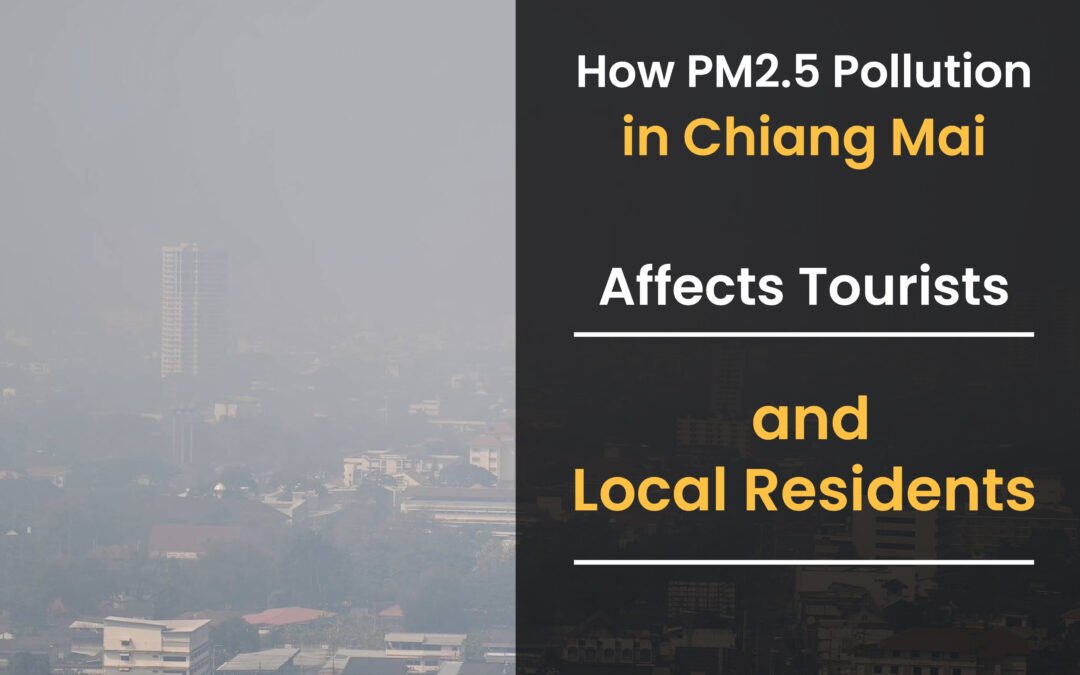
Chiang Mai is one of Thailand’s most important tourist destinations, known for its natural beauty, rich culture, and stunning mountain landscapes. However, in recent years the city has been facing a serious air pollution problem caused by PM2.5 dust, which affects both local residents and tourists from around the world.
The PM2.5 Chiang Mai problem usually occurs during the haze season, which is largely caused by forest burning and agricultural residue burning in Northern Thailand, as well as transboundary haze from neighboring countries. Combined with the basin-like geographical landscape of the region, PM2.5 particles tend to accumulate in the air for long periods, significantly reducing air quality during certain times of the year.
For this reason, understanding the causes, sources, and impacts of PM2.5 Chiang Mai is extremely important, especially for people who are planning to travel to Chiang Mai.
Current PM2.5 Situation in Chiang Mai
The PM2.5 Chiang Mai issue has become one of the major environmental crises, especially during the dry season each year when the level of fine particulate matter in the air rises significantly and affects the health of many residents and tourists.
PM2.5 refers to fine dust particles smaller than 2.5 microns, which are many times smaller than the width of a human hair. Due to their extremely small size, these particles can enter the lungs and bloodstream directly.
Global air quality monitoring systems indicate that Chiang Mai often experiences high PM2.5 levels during the haze season. In some periods, the average level reaches as high as 74.1 µg/m³ in April, which is considered unhealthy according to the U.S. Air Quality Index (AQI) standard.
Air quality reports also show that the annual average PM2.5 level in Chiang Mai has increased from 22.7 µg/m³ in 2017 to 32.3 µg/m³ in 2019, reflecting a continuing trend of worsening air pollution.
Another important factor is the geographical landscape of Northern Thailand. Chiang Mai is located in a basin surrounded by mountains, which causes air pollution to remain trapped in the area longer than in flat regions. When combined with forest fires and agricultural burning, PM2.5 levels can increase rapidly during certain periods. These factors have led Chiang Mai to be ranked among the cities with severe air pollution at certain times of the year.
Why Chiang Mai Faces Severe PM2.5 Problems Every Year
One of the major reasons PM2.5 Chiang Mai increases every year is biomass burning in agricultural and forest areas, especially during the dry season between February and April. Environmental research indicates that agricultural burning is a significant contributor to rising PM2.5 levels during Chiang Mai’s dry season.
In addition to local burning, PM2.5 levels are also affected by transboundary haze from neighboring countries such as Myanmar and Laos, where forest and agricultural burning also occurs. Smoke accumulating in the atmosphere causes the dust levels to rise continuously.
Factors that make the problem more severe
- Agricultural residue burning
- Forest fires in mountainous areas
- Transboundary haze from neighboring countries
- Stagnant weather conditions with little wind
The combination of these factors leads Chiang Mai into what is commonly called the “Burning Season”, a period when air quality significantly deteriorates. Recent data indicates that the haze season in Chiang Mai typically begins in January and peaks in March.
Main Sources of PM2.5 in Northern Thailand
The sources of PM2.5 Chiang Mai are complex and involve multiple human activities as well as natural factors. Studies on particulate composition show that biomass burning can account for up to 51% of PM2.5 during the haze season.
PM2.5 sources can generally be divided into four main categories:
- Agricultural burning: Burning crop residues after harvest, such as corn, sugarcane, and other field crops, is a major contributor to particulate pollution.
- Forest fires: Wildfires occurring in mountainous areas release large amounts of fine particles into the atmosphere.
- Fuel combustion: Urban traffic and energy use, including vehicles and industrial factories, also contribute to particulate emissions.
- Transboundary haze: Smoke from neighboring countries can move into Thailand and cause a rapid increase in PM2.5 levels.
When these pollution sources combine during the dry season, PM2.5 Chiang Mai levels often exceed standard air quality limits during several periods of the year.
Long-Term Health Effects of PM2.5
PM2.5 is considered one of the most harmful forms of air pollution for human health. Because of its extremely small size, it can enter the lungs and bloodstream directly. Environmental research indicates that PM2.5 exposure is associated with several serious diseases, including premature death.
Several studies conducted in Northern Thailand have found that long-term exposure to PM2.5 may increase the risk of non-communicable diseases such as:
- Heart disease
- Chronic lung disease
- Stroke
- Diabetes
Public health reports also indicate that high PM2.5 exposure can increase the risk of respiratory symptoms such as asthma and lung inflammation. At the national level, public health analyses estimate that air pollution contributes to more than 33,000 deaths per year in Thailand, highlighting the severe long-term health impact of PM2.5 pollution.
Best Months to Visit Chiang Mai
For travelers planning to visit Chiang Mai, choosing the right time can significantly reduce the risk of exposure to PM2.5 pollution. Generally, the haze season in Chiang Mai occurs during the early months of the year. From January to April, PM2.5 levels are usually at their highest, with March often being the peak month. During this time, visitors may experience reduced visibility and poor air quality.
Recommended periods to visit Chiang Mai
| Month | Situation |
| November | Air quality begins improving after the rainy season |
| December | Good air quality and cool weather |
| July – September | Rain helps reduce dust particles in the air |
Checking real-time PM2.5 levels before traveling is important because pollution levels can change depending on weather conditions and burning activities in the region. For travelers planning to visit Chiang Mai, regularly monitoring air quality information can help in planning activities and protecting health from PM2.5 exposure effectively.
Conclusion
The PM2.5 Chiang Mai problem is one of the major environmental challenges caused by several factors, including agricultural burning, forest fires, and transboundary haze. This type of air pollution not only affects the quality of life for local residents but also has long-term health impacts and affects Chiang Mai’s tourism industry.
However, monitoring air quality data, choosing the appropriate travel season, and applying preventive measures can significantly reduce the risks associated with PM2.5. For those planning to travel to Chiang Mai, checking air quality conditions before the trip is an important step to ensure both health safety and a well-planned travel experience.