Why Do So Many People Say Chiang Mai Is More Than Just a Tourist Destination, but a Once-in-a-Lifetime Experience?
If you have ever thought that Chiang Mai was simply a northern Thai city filled with cafés, temples, and mountains, you may be missing what travelers from around the world are actually searching for. For many people, Chiang Mai is not just a destination — it is a place that somehow slows life down in the best possible way.
The question is: in a city filled with nature, culture, and unique activities, what are the real once-in-a-lifetime things to do in Chiang Mai?
This article will take you through both the famous attractions and the experiences people keep talking about long after they leave — from waking up before sunrise to watch the sea of mist over the mountains, learning Northern Thai cooking with locals, to embracing the slow-life lifestyle that Chiang Mai offers unlike any other major city. Along the way, you will also find practical insights, important things to know, and travel tips that can help you plan a more meaningful trip.

What Are the Best Things to Do in Chiang Mai for First-Time Visitors?
For first-time visitors, most people begin with temples, cafés, and night markets. But if you ask travelers who have actually spent several days in Chiang Mai, many of them will tell you that the real charm of the city lies in the experiences between destinations.
Chiang Mai is not a city where you rush to complete every check-in spot like in many large tourist cities. Instead, the longer you stay, the more you begin noticing the small details that quietly make you feel connected to the place.
So what are the truly unforgettable first experiences?
One thing both Thai and international travelers often mention is not “touring Chiang Mai,” but “living like Chiang Mai locals.”
Instead of starting the day by racing between attractions, some people choose to wake up early for coffee at a small café in the Old Town, walk through local neighborhoods, or spend half a day reading quietly in a café — experiences that are increasingly rare in fast-paced cities.
Why Is Chiang Mai Perfect for Slow Travel?
Today, the concept of Slow Travel has become increasingly popular, especially among younger travelers seeking meaningful experiences rather than quick check-ins.
Chiang Mai is considered one of the best cities for this lifestyle because it offers:
- Nature
- Lanna culture
- Creative cafés and spaces
- Local communities
- Experience-based activities
Unlike tourist destinations focused entirely on entertainment, Chiang Mai gives people the feeling that they can simply “exist here comfortably without getting bored.”
How Is Traveling in Chiang Mai Different From Bangkok or Phuket?
|
Chiang Mai |
Bangkok / Phuket |
|
Focused on atmosphere and lifestyle |
Focused on nightlife and entertainment |
|
Ideal for long-term relaxation |
Ideal for activities and nightlife |
|
Known for cafés and nature |
Known for malls, restaurants, and beaches |
|
Encourages slow living |
Fast-paced urban lifestyle |
This is why many people who initially planned to stay only a few days end up extending their trips — and some even move here permanently.

Why Is Visiting Doi Suthep Still One of Chiang Mai’s Most Iconic Experiences?
If you talk about things to do in Chiang Mai without mentioning Doi Suthep, it almost feels like an incomplete trip.
Wat Phra That Doi Suthep is one of Chiang Mai’s most important temples, located high above the city on a mountain overlooking nearly all of Chiang Mai. It represents the spiritual heart of the city while also reflecting Lanna culture and local traditions.
Many people assume a temple is just a temple — but experiencing Doi Suthep at sunrise feels completely different from seeing photos online. The cool mountain air, the faint scent of incense, the sound of the wind, and the golden pagoda glowing in the morning light create a feeling that makes time seem to slow down.
Sometimes, what people remember most about Doi Suthep is not the temple itself, but the journey up the mountain.
A Real Experience Many Travelers Share
Many visitors choose to arrive around 6–7 AM because the weather is cool, crowds are smaller, and the morning light reflecting off the golden stupa is especially beautiful.
Some travelers rent motorbikes before sunrise and ride up the mountain while the city is still dark. Along the way, they encounter cyclists, runners, and locals heading to the temple for morning prayers, creating a much more authentic atmosphere than a typical tourist landmark.
Others prefer visiting in the evening to watch the sunset over Chiang Mai city lights, which creates a peaceful and romantic atmosphere.
This is what makes Doi Suthep different from destinations that are simply “photo spots.” The experience changes depending on the time of day.
Why Has the Naga Staircase Become One of Chiang Mai’s Most Memorable Symbols?
One of the most iconic parts of Doi Suthep is the long Naga staircase with over 300 steps leading to the temple. Although elevators are available today, many people still choose to walk because they believe it is part of the experience.
As you walk upward, you hear temple bells, chanting, and gradually notice more details of traditional Lanna art and architecture. This creates a very different feeling compared to simply taking the elevator.
According to the Tourism Authority of Thailand, Doi Suthep remains one of the most visited tourist attractions in Northern Thailand and is among the first landmarks international travelers search for before arriving in Chiang Mai.
The temple also holds deep historical and religious importance, dating back to the Lanna Kingdom era and continuing to serve as a spiritual center for local residents today.

Is the Yi Peng Lantern Festival Really Worth Seeing?
One of Chiang Mai’s most globally recognized experiences is the Yi Peng Festival lantern festival.
Many travelers consider it a true bucket-list experience because of the atmosphere created by thousands of lanterns floating into the night sky accompanied by prayers, candlelight, and collective emotion.
What makes Yi Peng special is not just the visual beauty, but the shared emotional experience happening throughout the city at the same moment.
Before the lantern release, many areas hold religious ceremonies where people sit quietly together, make wishes, and write hopes on their lanterns. Because of this, Yi Peng feels less like a photo opportunity and more like a meaningful cultural experience deeply connected to Lanna traditions.
Does the Lantern Festival Impact the Environment?
Yes. In recent years, environmental concerns regarding waste, pollution, and aviation safety have become more important, leading to stricter regulations in some areas.
According to guidelines from the Tourism Authority of Thailand and local authorities, many events now aim to become more environmentally responsible by:
- Using biodegradable materials
- Restricting lantern-release zones
- Limiting participant numbers
- Organizing post-event waste collection

What Makes Chiang Mai Night Markets Different From Other Cities?
Night markets are another reason why many travelers fall in love with Chiang Mai.
Popular places such as the Chiang Mai Night Bazaar and Sunday Walking Street are not just about food. They are filled with handmade crafts, live music, and local artists that create a very different atmosphere from ordinary tourist markets.
What makes Chiang Mai’s night markets unique is that they feel less like shopping centers and more like cultural gathering spaces.
Comparing Night Market Atmospheres
|
Chiang Mai |
Typical Tourist Cities |
|
Focus on handmade crafts and art |
Focus on mass-produced products |
|
Relaxed slow-life atmosphere |
Busy and crowded atmosphere |
|
Strong Lanna cultural identity |
More commercialized |
For example, you might buy handmade soap from a local artisan, then five minutes later sit beside the street listening to live folk music or chatting with an artist painting outside their own shop.
These moments make Chiang Mai feel truly alive.

Should You Visit an Ethical Elephant Sanctuary in Chiang Mai?
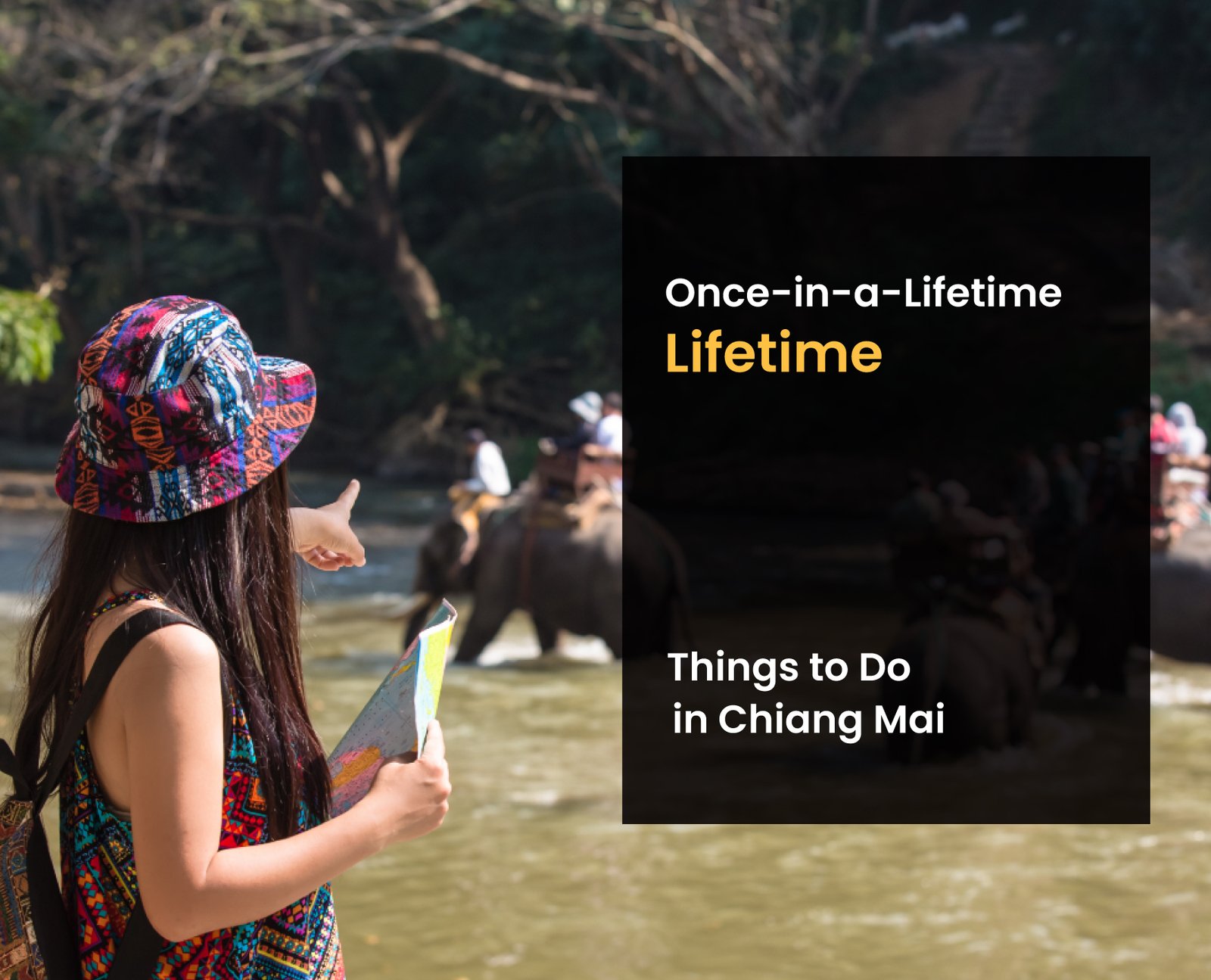
Elephant-related experiences are often considered one of the true once-in-a-lifetime things to do in Chiang Mai because elephants have long been part of Northern Thailand’s history and culture.
However, in recent years, travelers have become much more conscious about animal welfare.
Today, many travelers are not just looking for close interactions with elephants – they are asking whether those experiences are ethical and sustainable.
This is why the phrase “ethical elephant sanctuary” has become increasingly popular in Chiang Mai.
What Makes an Ethical Sanctuary Different?
Many animal welfare and sustainable tourism organizations recommend sanctuaries that:
- Do not force elephants to perform
- Do not allow elephant riding
- Limit daily visitor numbers
- Focus on rehabilitation and natural living
- Employ long-term caretakers who understand elephant behavior
Although these experiences may appear less dramatic than traditional elephant shows, many travelers find them more meaningful and authentic.
Why Is Elephant Riding Becoming More Controversial?
World Animal Protection has published concerns about tourism industries using animals for entertainment, highlighting how some elephants undergo harmful training practices to support certain tourist activities.
At the same time, many tourism organizations in Thailand have begun promoting Responsible Tourism to help create long-term economic benefits without harming animals or the environment.

Can Food Become the Highlight of Your Chiang Mai Trip?
For many travelers, food in Chiang Mai is not just delicious — it is one of the biggest reasons they want to return.
Northern Thai cuisine has a distinct identity compared to other regions of Thailand, making local food exploration one of the must-try things to do in Chiang Mai.
Popular dishes include:
- Khao Soi — creamy curry noodles influenced by Chinese Muslim cuisine
- Sai Ua — aromatic herbal sausage
- Nam Prik Noom — smoky green chili dip often served with crispy pork skin
- Gaeng Hang Lay — Burmese-influenced sweet and sour pork curry
Interestingly, many travelers say the best moments are not when photographing the food, but when sharing meals with locals or learning why Northern Thai flavors differ so much from Central Thai cuisine.
Why Are Chiang Mai Cooking Classes Famous Worldwide?
Chiang Mai has become one of the world’s most popular destinations for cooking classes because Northern Thai cuisine involves unique herbs, curry pastes, and cooking traditions deeply connected to Lanna culture.
Many classes begin with:
- Visiting local fresh markets
- Learning about local vegetables and herbs
- Making curry paste by hand
- Cooking dishes from scratch
For many international travelers, this becomes more than a cooking activity — it becomes a cultural experience.
How Is Northern Thai Food Different From Typical Thai Cuisine?
Many first-time visitors assume all Thai food is extremely spicy, but Northern Thai cuisine is actually quite different from Central and Northeastern Thai food.
|
Northern Thai Cuisine |
Central Thai Cuisine |
|
Softer and milder flavors |
Stronger and sweeter flavors |
|
Heavy use of local herbs |
More coconut milk and seasoning |
|
Often served with Khantoke-style dining |
Typically served as standard shared dishes |
A clear example is Nam Prik Noom, which emphasizes smokiness and fresh ingredients rather than intense spice.

Is Simple Living the Real Reason People Fall in Love With Chiang Mai?
This may be the hardest question to answer. Because ultimately, what makes people return to Chiang Mai again and again may not be famous temples, trendy cafés, or mountain views — but simply the feeling of living here.
Chiang Mai somehow makes time feel slower.
- Sitting in cafés for hours without pressure
- Wandering morning markets without a destination
- Having casual conversations with local vendors
- Waking up to distant mountain views every morning
- Driving through tree-lined roads after rain
These moments may seem small, but together they create emotional experiences that many large cities cannot offer.
Why Does Chiang Mai Feel Different From Other Tourist Cities?
Compared to major Asian cities like Bangkok, Tokyo, or Seoul, Chiang Mai may not have ultra-modern transportation systems, massive shopping malls, or nonstop nightlife.
But what Chiang Mai offers is space to breathe. Many travelers — especially digital nomads and creative professionals — choose to live here because of the relatively affordable cost of living, nearby nature, and balanced lifestyle.
According to Nomad List, Chiang Mai has repeatedly ranked among the world’s most popular cities for digital nomads due to its affordability, quality of life, and strong online-work community.
Is Chiang Mai Still a Great Place to Stay?
Of course, Chiang Mai is not perfect — and it is important to discuss that honestly.
Common concerns include:
- PM2.5 air pollution during burning season
- Traffic congestion during high season
- Rising café and accommodation prices in some areas
- Crowded tourist zones
Some travelers who visited Chiang Mai a decade ago feel the city has become more commercialized and less quiet than before.
Yet despite these changes, many people still return because the core identity of Chiang Mai remains the same: relaxation, friendliness, and closeness to nature.
When Is the Best Time to Visit Chiang Mai?
The answer depends on the type of experience you want.
|
Season |
Highlights |
Things to Consider |
|
Nov–Jan |
Cool weather, beautiful mountain views |
Crowded season, higher hotel prices |
|
Feb–Apr |
Festivals like Yi Peng and Songkran |
PM2.5 levels may rise |
|
May–Oct |
Green landscapes, fewer tourists |
Frequent rain and difficult mountain travel |
Conclusion
Chiang Mai may not be the most extravagant city in Asia, but it is one of the cities people miss the most after leaving. What makes Chiang Mai special is not only its attractions, but the feeling of living there.
Whether it is watching mist over the mountains, eating Khao Soi at a tiny local restaurant, or wandering through a night market without rushing, all of these moments come together to create experiences that are difficult to explain through photos alone.
And perhaps that is exactly why people around the world continue searching for “things to do in Chiang Mai.”
Q&A: Frequently Asked Questions About Things to Do in Chiang Mai
- What is the best month to visit Chiang Mai?
November to January is considered the best period due to cool weather and ideal conditions for mountain trips and outdoor exploration.
- Is Chiang Mai suitable for solo travelers?
Yes. Chiang Mai is generally considered safe and offers many cafés, hostels, and activities designed for solo travelers.
- How many days are enough for Chiang Mai?
At least 3–5 days are recommended to experience the city, cafés, nature, and local activities properly.
- Is renting a motorbike recommended?
Yes, it is one of the most convenient ways to explore Chiang Mai and nearby mountains. However, travelers should have an international driving permit and drive carefully.
- What food should I not miss in Chiang Mai?
Khao Soi, Sai Ua, Nam Prik Noom, and Gaeng Hang Lay are among the most iconic Northern Thai dishes visitors should try.